

Card Author:
Location:
Date:


The church of the Holy Family, managed by the Passionist Fathers of Carbognano, was built between 1921 and 1939, thanks to the local benefactors Sisto Caproli and Dionira Orlandi.
Carbognano, Church of Sacra Famiglia
THE HISTORY
The birth of the church of the Holy Family of Carbognano is connected to the birth of the adjacent Convent of the Passionist Fathers. Since the beginning of the 20th century, between 1921 and 1922, a couple of local benefactors, Mr. Sisto Caproli and Mrs. Dionira Orlandi, donated their land to build the church. The same couple contributed to the construction of the rooms, including the church. As the economic resources allowed them to do so, they sent the factory forward in progression, brick by brick. These works went on for more than 20 years and once completed in 1939, the war prevented a proper inauguration. We had to wait until 1941 for the inauguration, exactly on September 29th. In the presence of Beniamino Gigli and a large participation of the public, the church was finally opened. Managed by the Passionists of Carbognano, since then it keeps its doors open to give hospitality and care to the souls of the faithful who are looking for dialogue to find themselves.
THE EXTERIOR
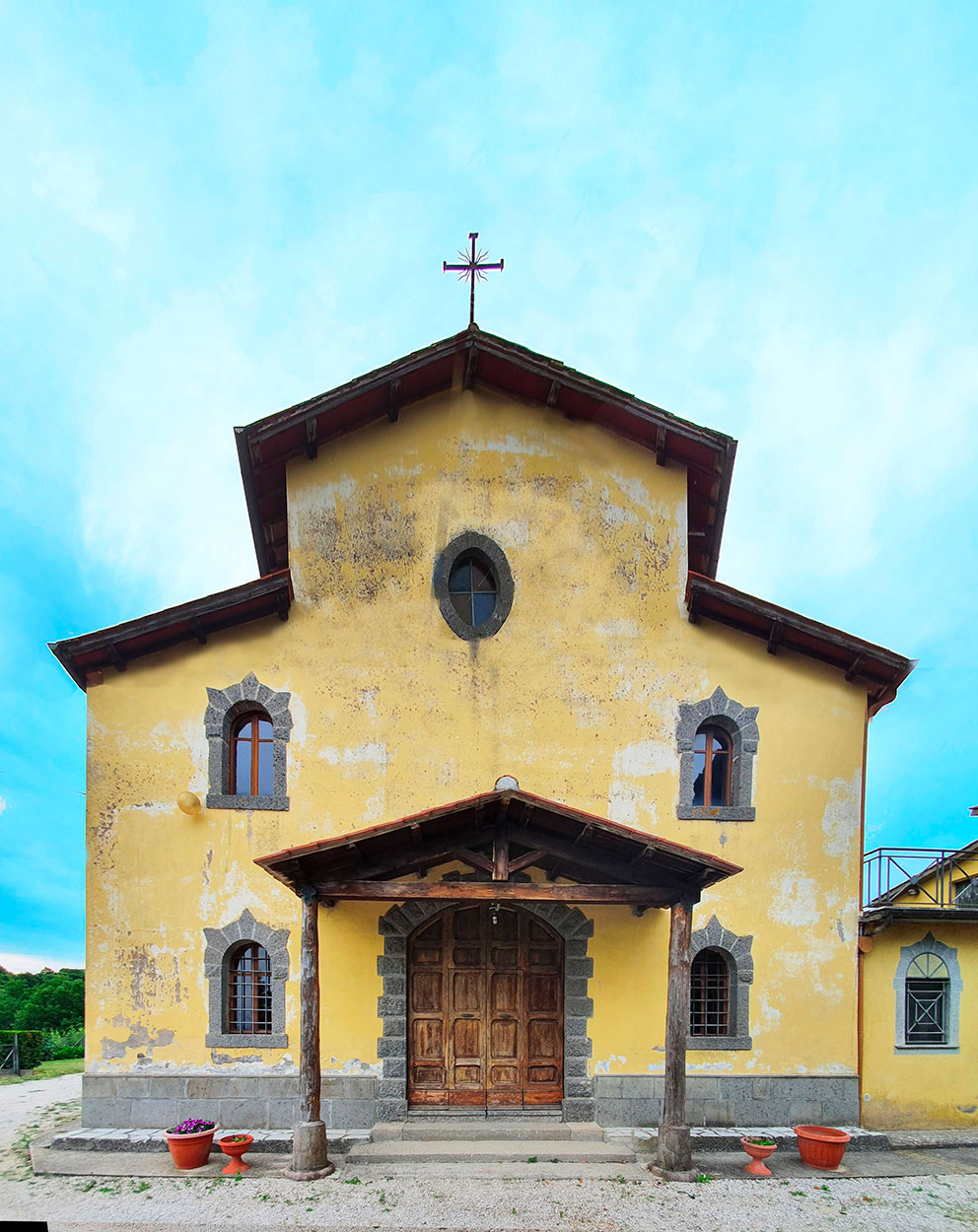
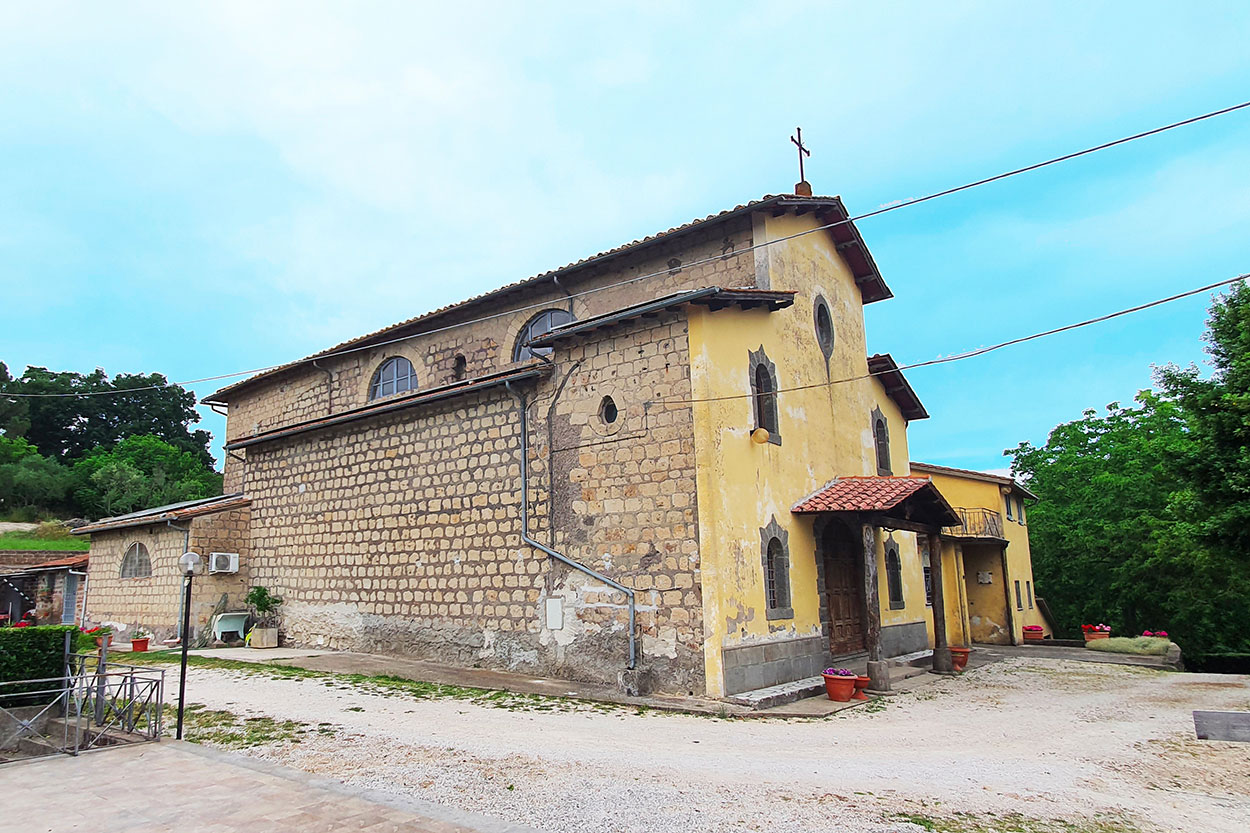
The façade is composed of a simple gabled structure with two rows of windows with simple arches, symmetrically arranged at the sides of the large central portal. A structure formed by two wooden columns and a truss characterizes a pronaos in antis, with a roofing with tiles placed in front of the central portal. The portal, still original, was restored 25 years ago (1996), with interventions that affected only the lower part, where there were clear signs of neglect of time. The portal that we still see today, is the same immortalized in the photographic testimony that portrays the spouses Sisto Caproli and Dionira Orlandi in front of the entrance of the church, in the photo preserved inside the convent. The bell tower of the church is moved to the right of the structure, an integral part of the rest of the complex.
THE INTERIOR
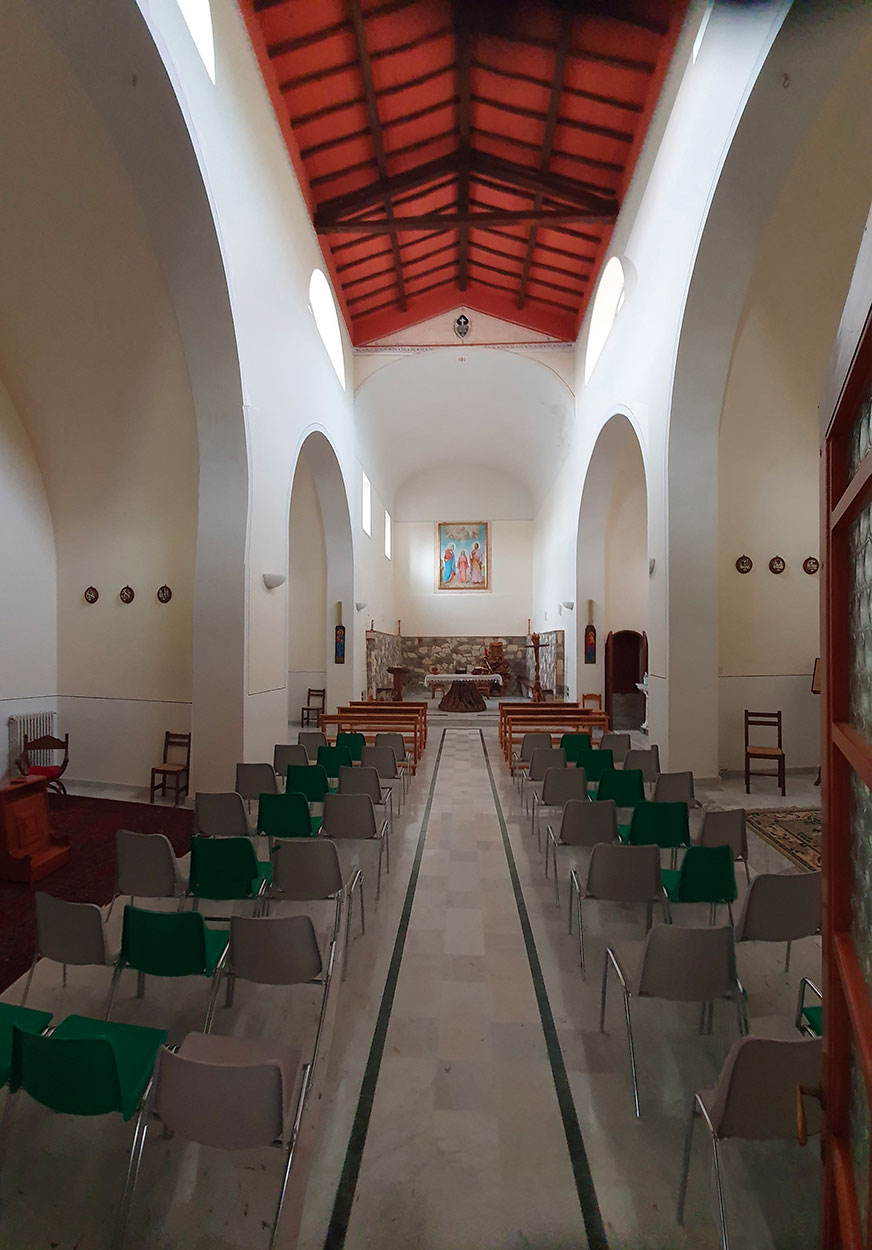
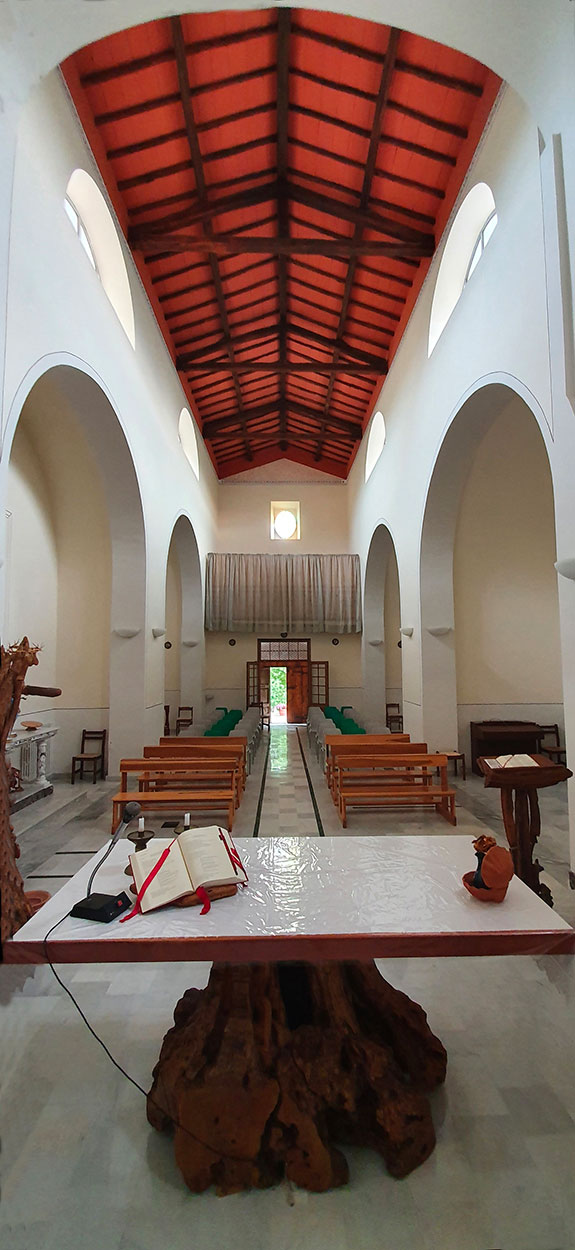
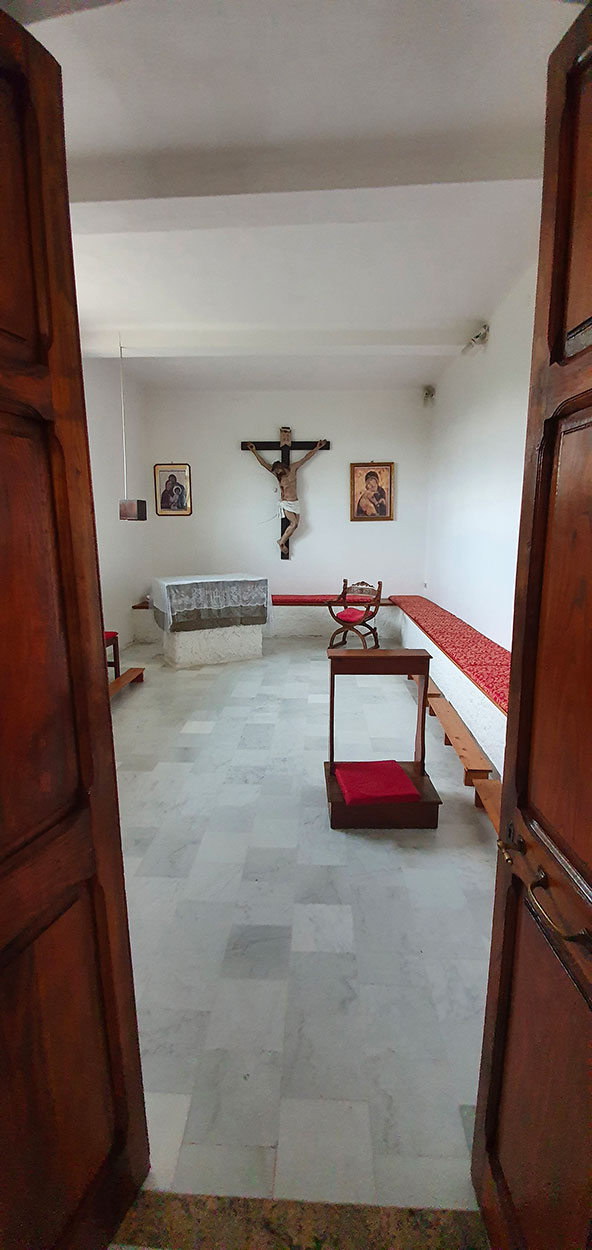
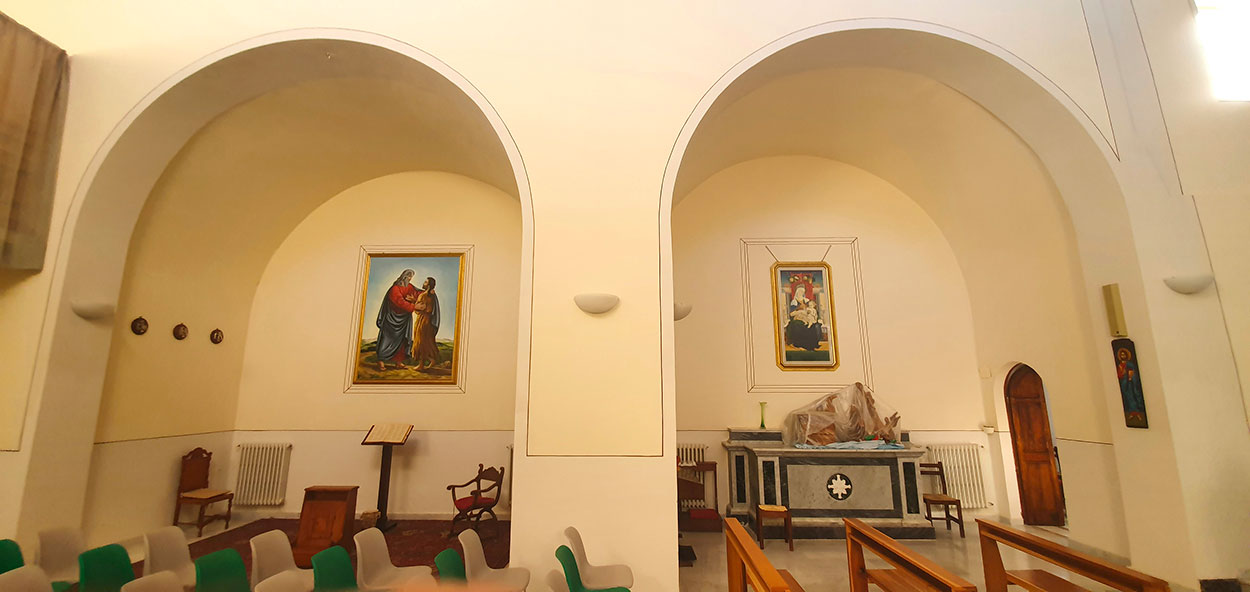
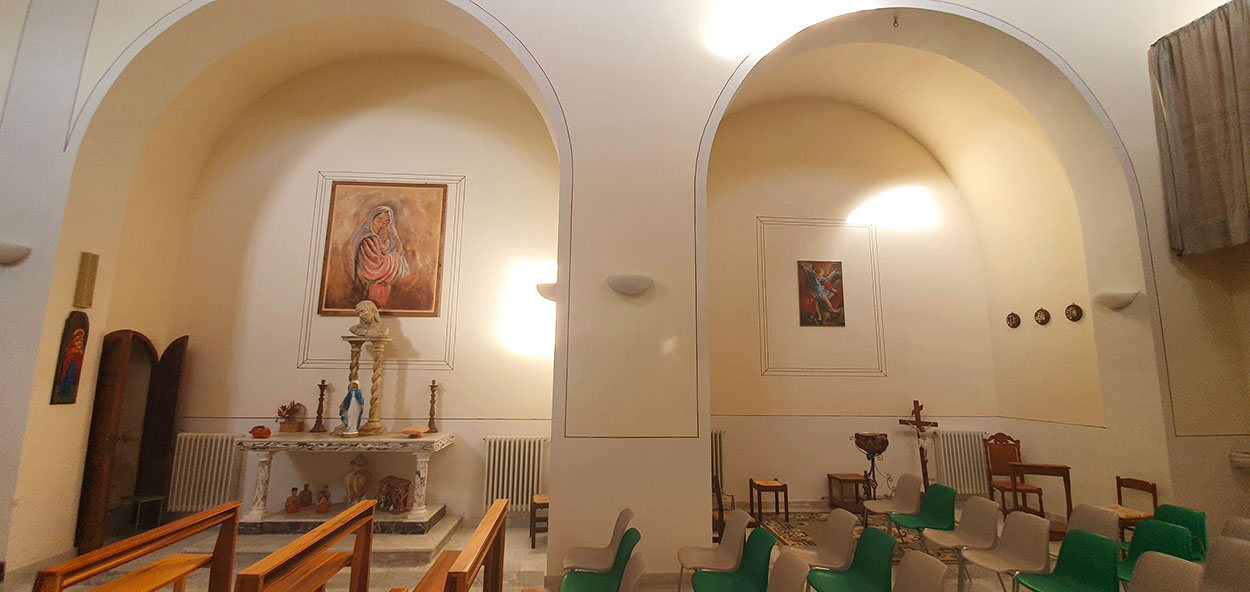
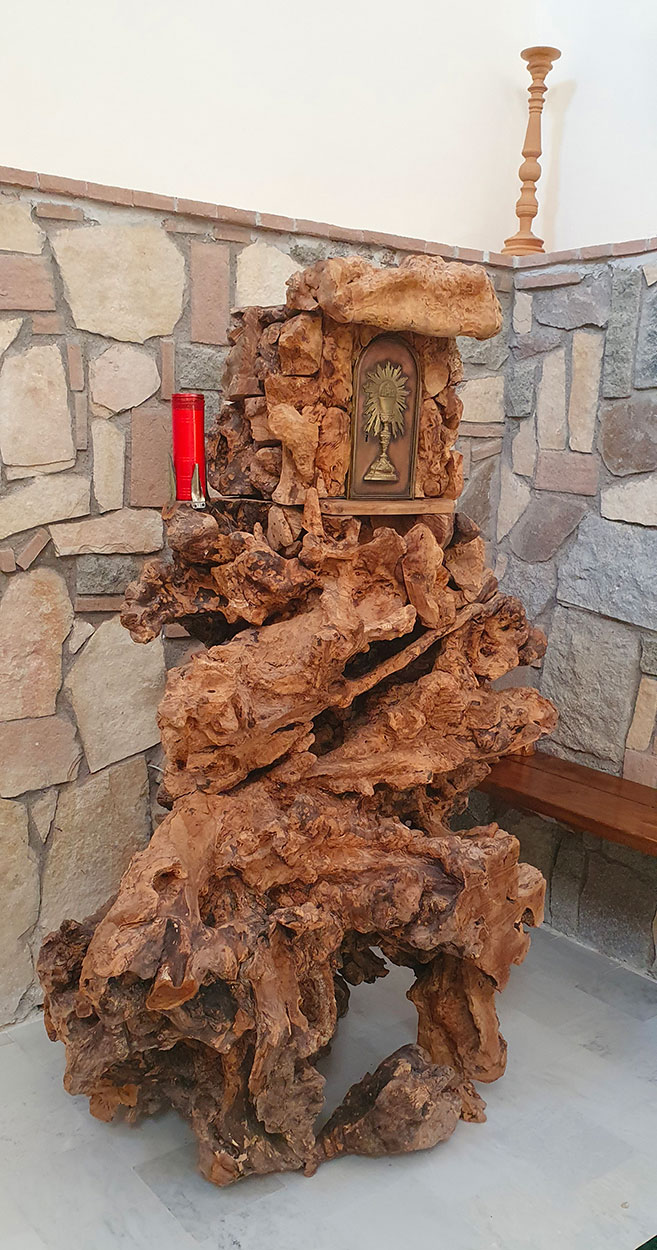
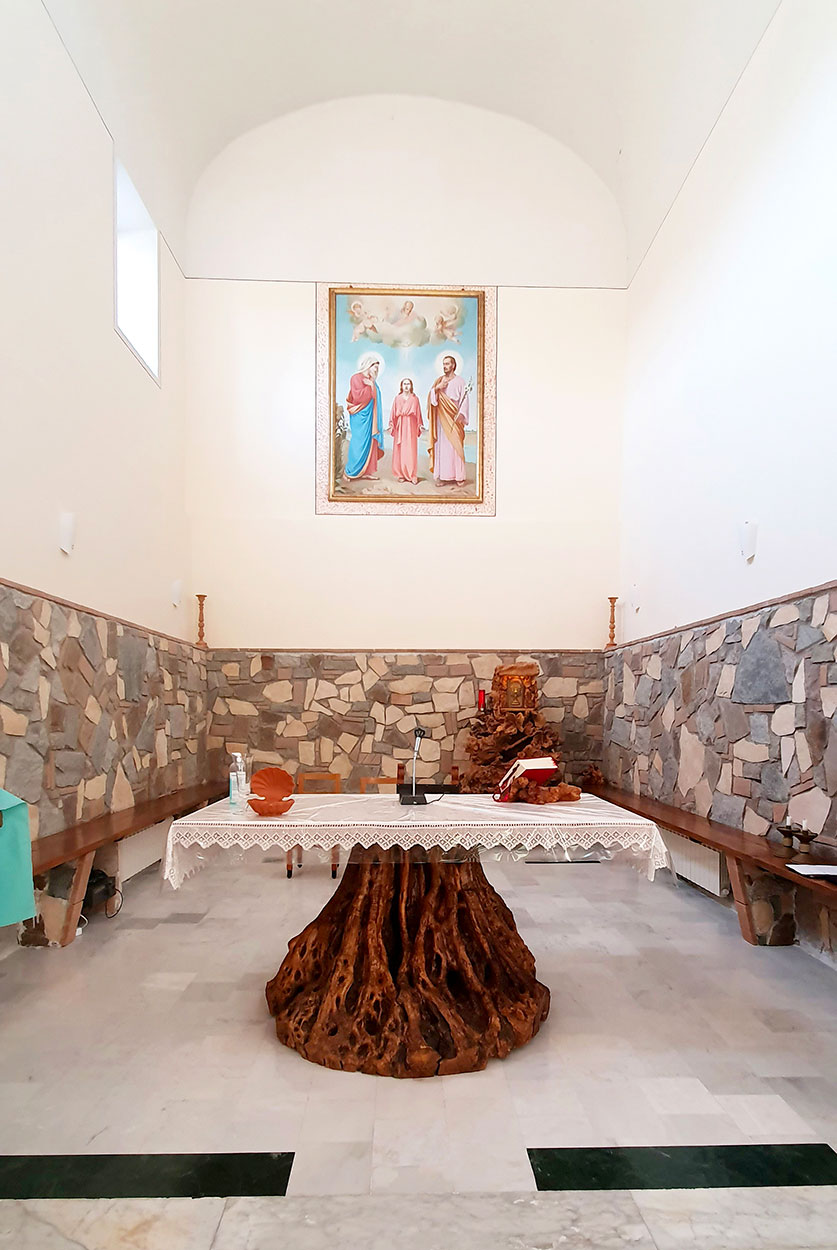
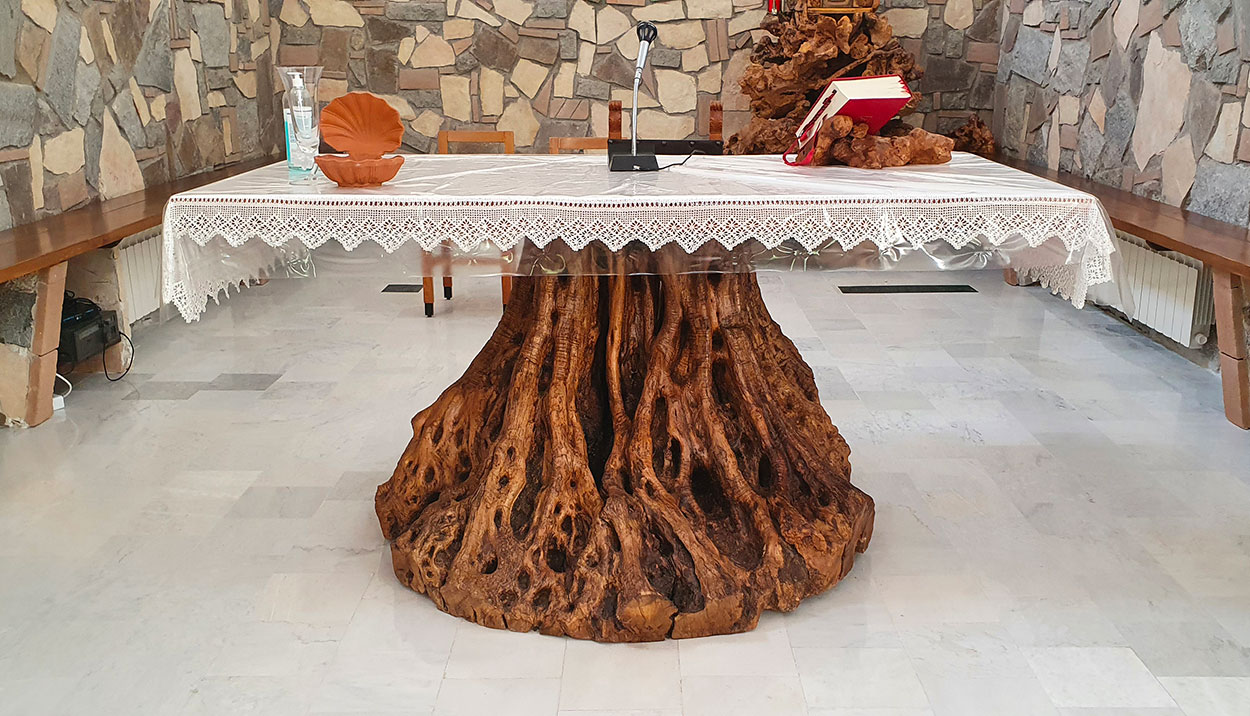
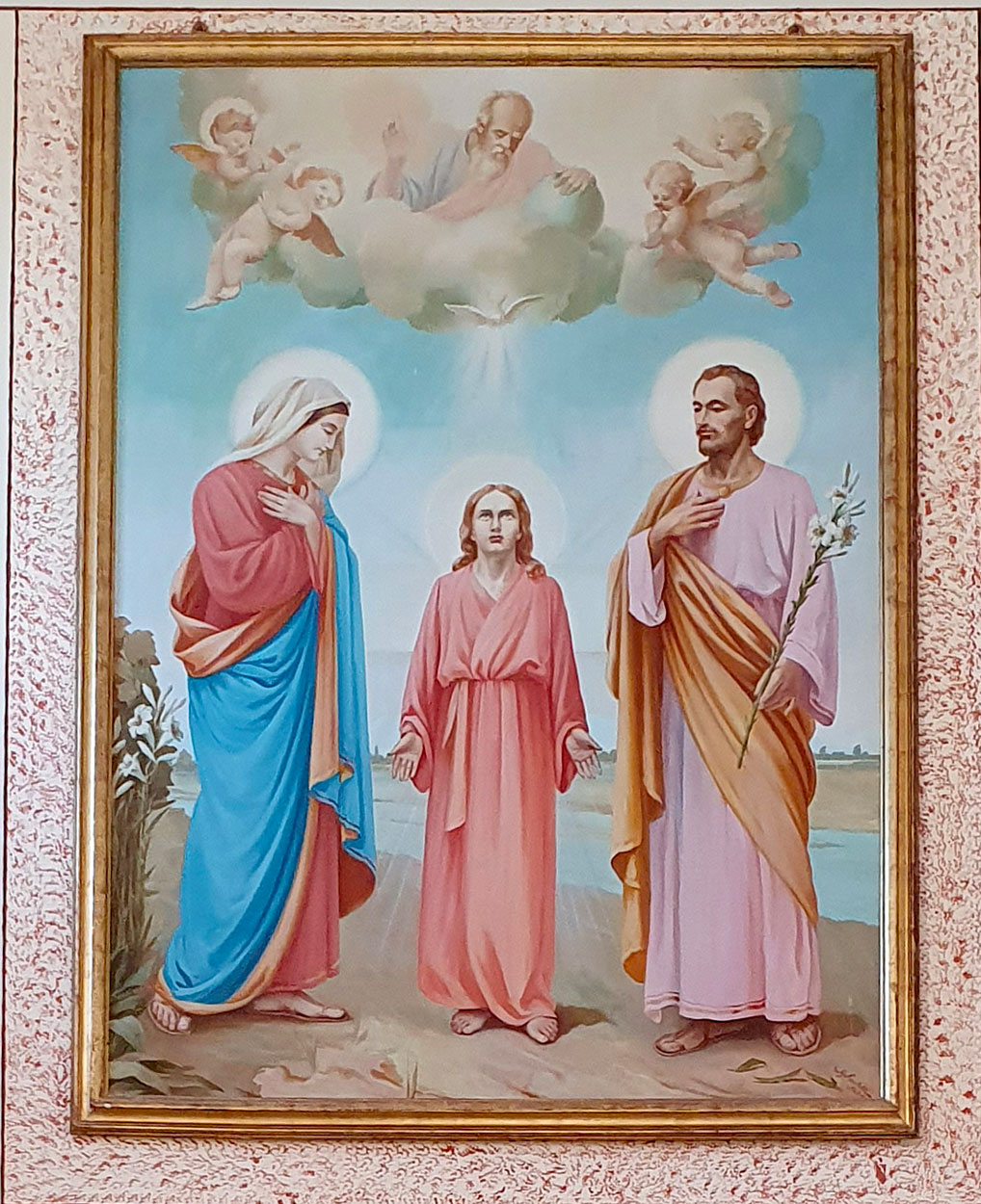
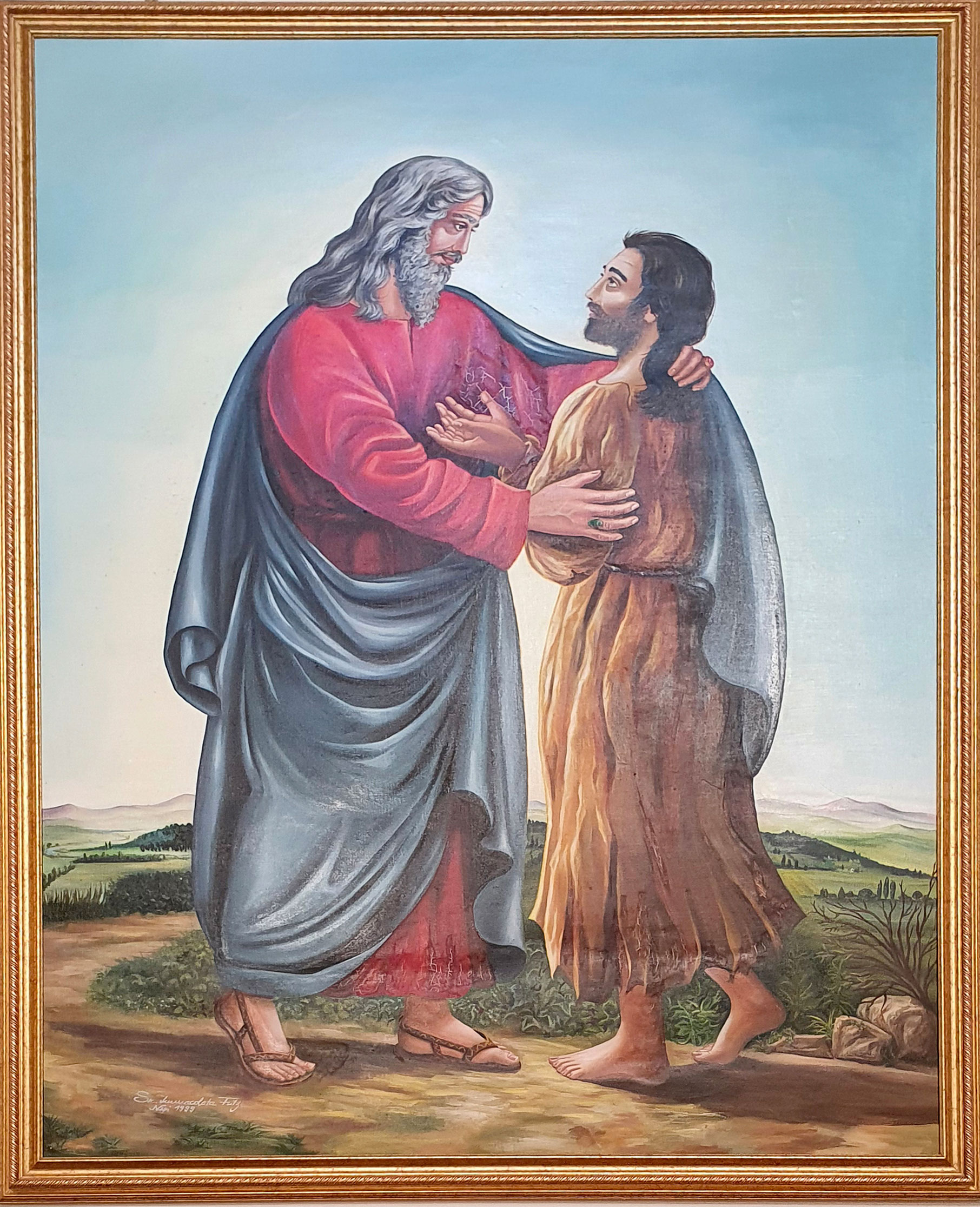
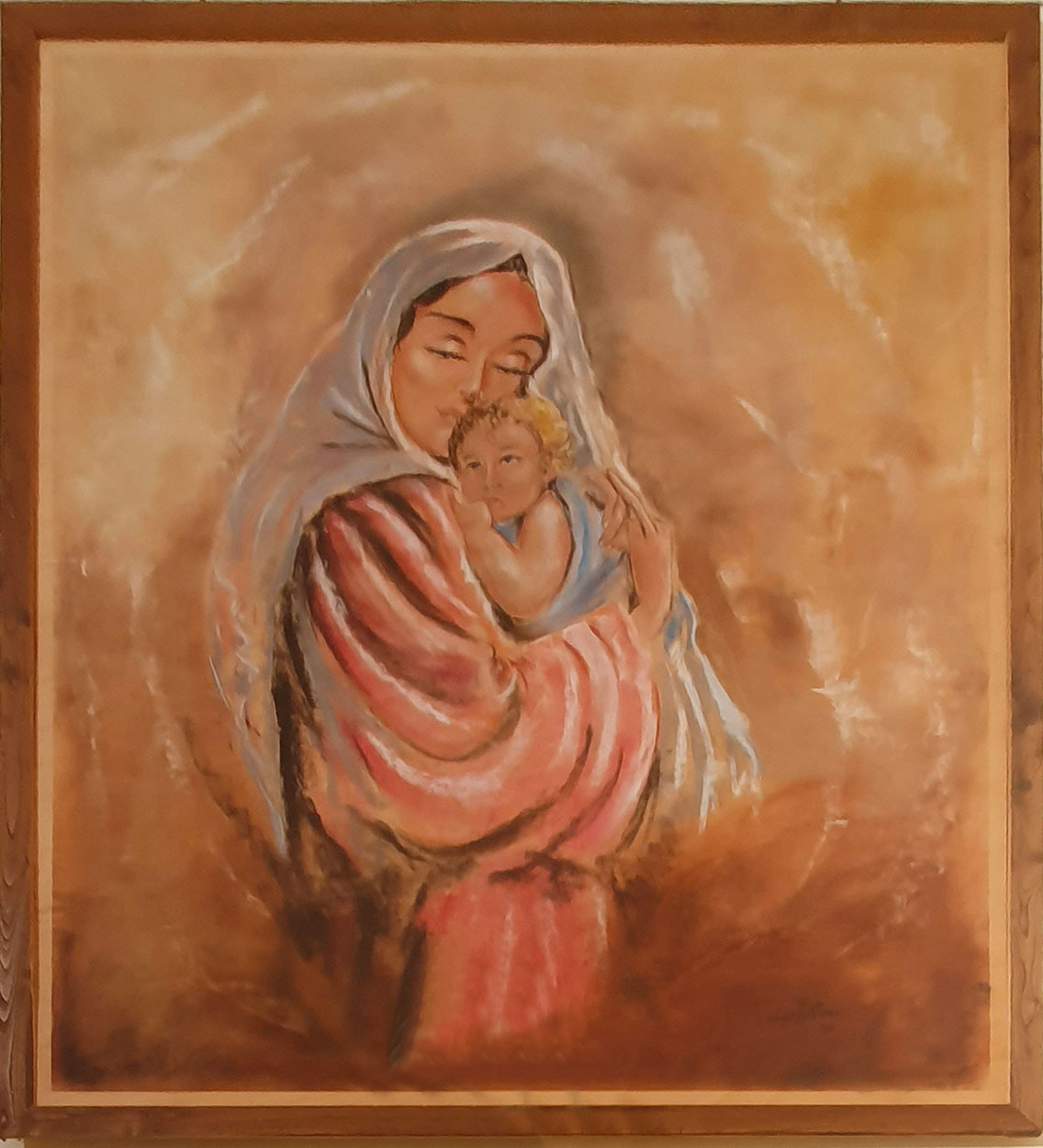
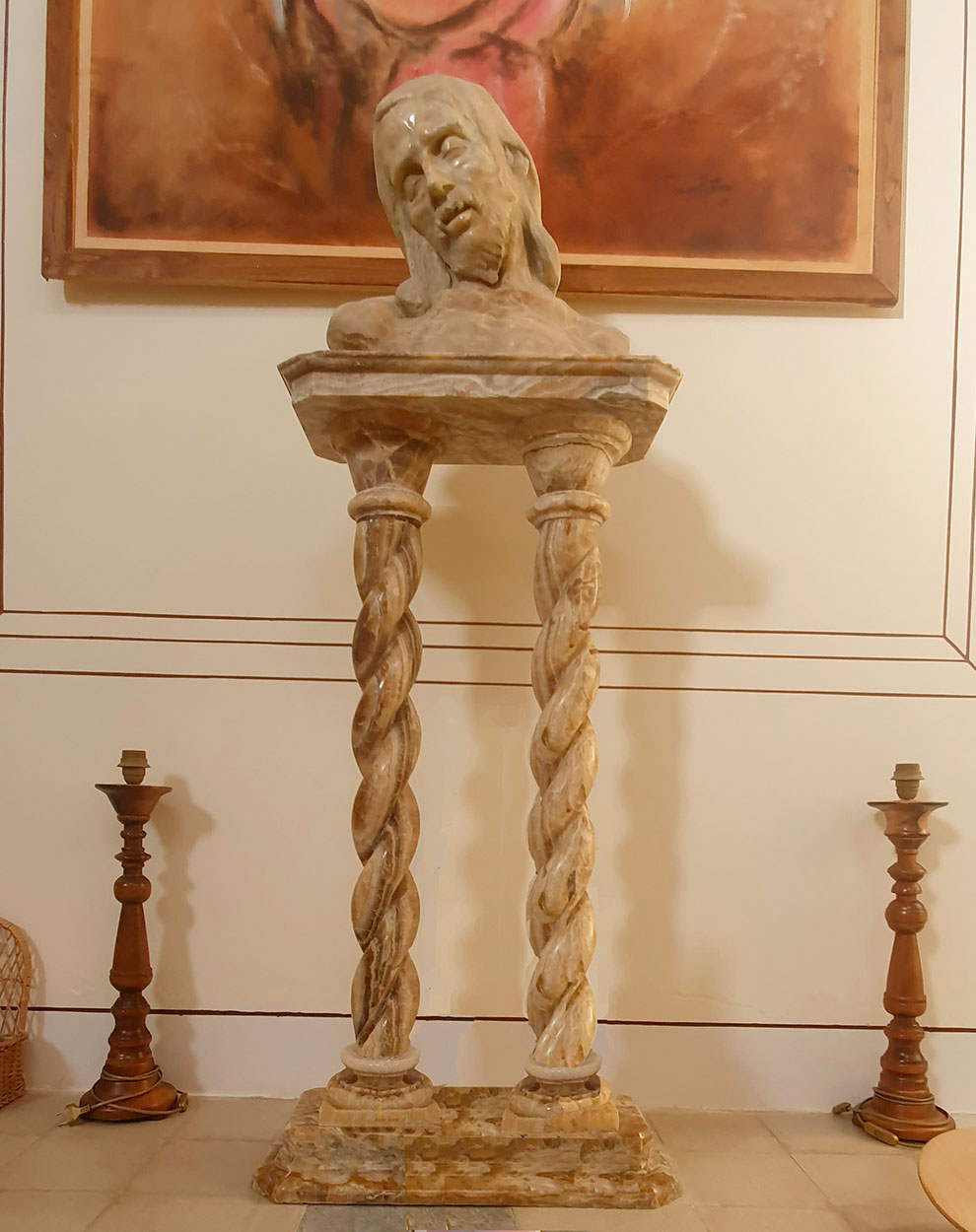
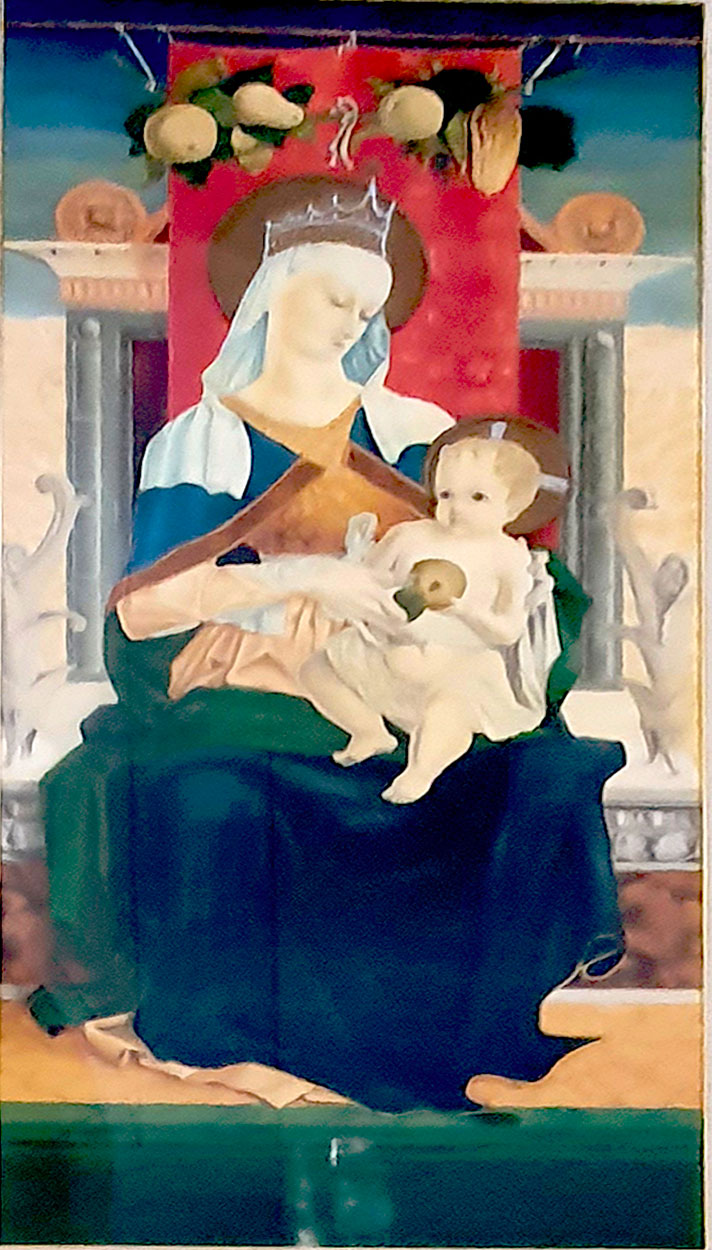
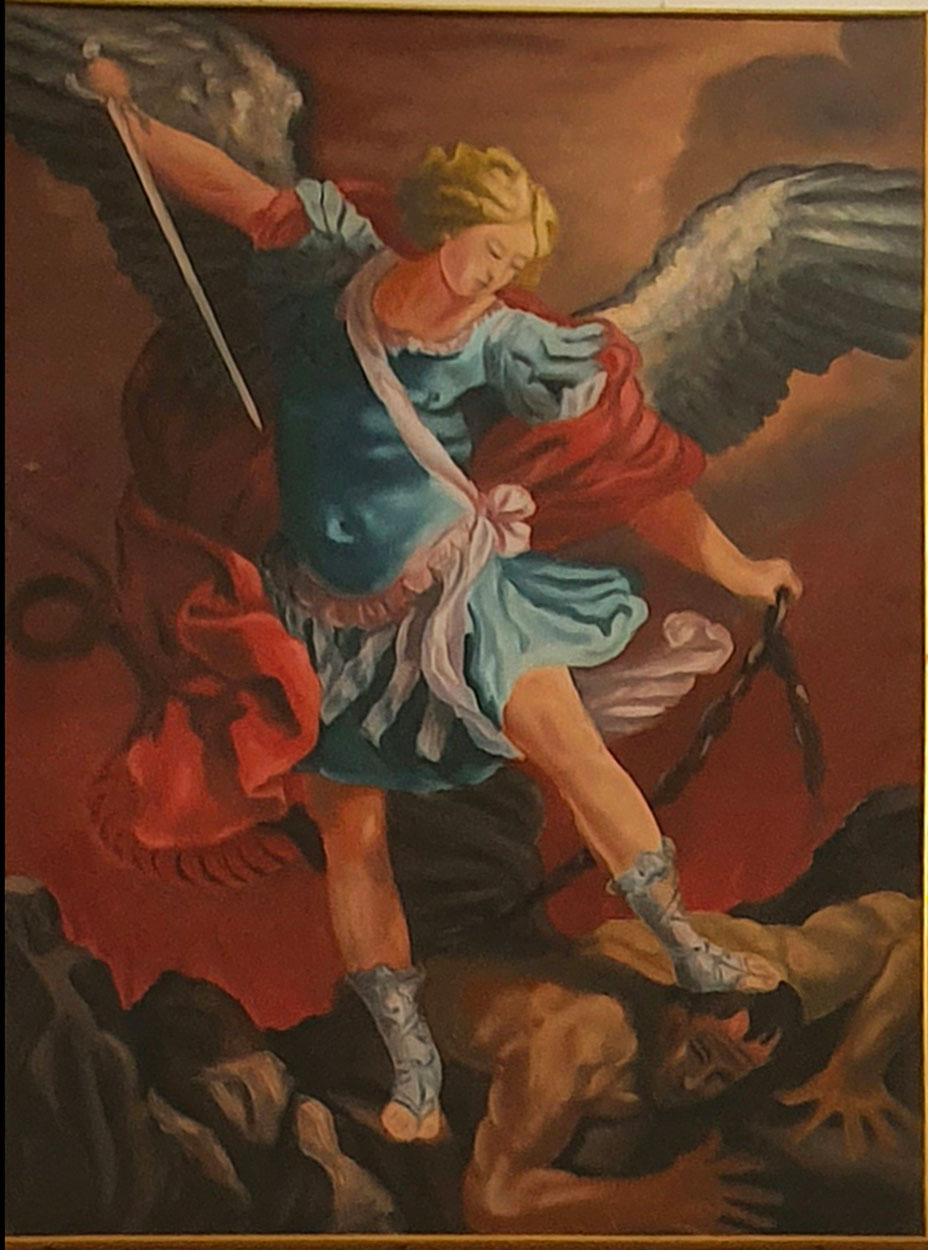
The interior of the church is characterized by the simple and linear lines. The trussed roof and the white tint given to the whole single-nave environment returns in its essential forms the brightness that characterizes the whole building. Along the sides of the walls, there are two windows with half-moon opening and two chapels on each side. The first chapel on the left is dedicated to the Prodigal Son. On the back wall there is a painting with the same subject made by Sister Immacolata Frei in 1999, made by Isacchi of Carbognano. The second chapel on the left is dedicated to the Virgin. On the back side there is a canvas copy of the famous Madonna on the throne with Child by Carlo Crivelli (2nd half of the 15th century), painted by Gilberto Perini in 1997. On the altar there is a wooden sculpture reproducing the miracle of the Holy House of Loreto, made by Gai Felice in 2001. The first chapel on the right is dedicated to San Michele Arcangelo. The back wall hosts a canvas of the same subject painted in 1941, taken from the most famous work of Guido Reni. The canvas was among the first works donated for the decoration of the church together with the canvas still placed in the apse. The second chapel on the right is dedicated to the Virgin and is decorated on the back wall with a work reproducing the Virgin with Child. The work was realized in a popular manifestation in Nepi by a “madonnaro”, and given, once the manifestation was over, to Don Antonio di Carlo for the decoration of the church of Carbognano. On the altar of the chapel there is a valuable sculpture in onyx reproducing the bust of Christ on twisted columns, taken in the moment of the Deposition. The work was donated to the church in 1999 by the benefactor Count Cencelli of Fabrica di Roma. In the presbytery the high altar and a little further on, the sacred olea. Both works are characterized by the manufacture of 2 large olive tree roots from the hills of Perugia. The tribune is decorated with a large canvas of the Holy Family, a work that also gives its name to the religious structure. The work was realized contextually to the inauguration of the building in 1941.
Address: Via Montagna, 11 – Carbognano (VT). Referent of the structure: Don Antonio Di Carlo Tel. 3398836235.
ESSENTIAL BIBLIOGRAPHY
Gianfranco Ravasi, Qohelet. The most original and scandalous book of the Old Testament. Sao Paulo Editions 2012.
Foschi Franco, In the Centenary of Beniamino Gigli. Lithotypography of BIEFFE Recanati 1991. http://www.beniaminogigli.it/bibliografia.
Renzo Innocenti, Carbognano. Viterbo 2000.
Special Thanks to Don Antonio di Carlo for the information for the realization of the text.
Translated with www.DeepL.com/Translator (free version).